- Zuhause
- /
- PCR
- /
- Irish life sciences 2.2ml 96 square well u bottom deep well plate
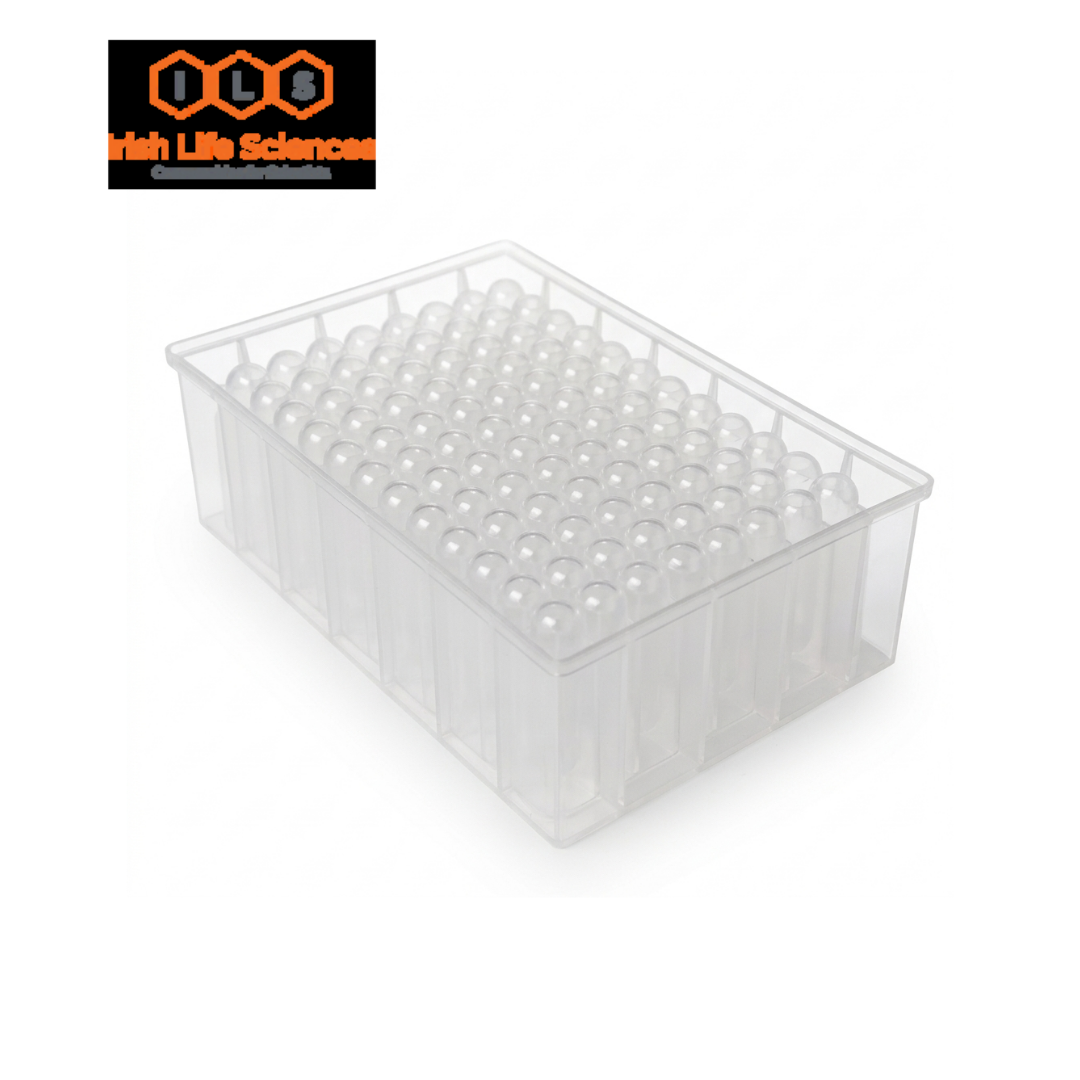
Irish Life Sciences 2.2ml 96 Square Well U bottom Deep Well Plate
Artikelnummer: 2.2S96-312U
Irish Life Sciences 2.2 mL 96-well deep well plates feature square wells with a U-bottom design, maximizing storage volume while enabling efficient sample recovery. Manufactured from medical-grade polypropylene, these plates deliver strong chemical resistance, high centrifugation stability, and reliable performance for high-throughput laboratory workflows.
Zusätzliche Informationen & Downloads
Irish Life Sciences 2.2ml 96 Square Well U bottom Deep Well Plate Features
Irish Life Sciences 96-well deep well plates are designed for laboratories that require high-volume sample processing without sacrificing consistency or compatibility. With a 2.2 mL capacity per well and a square well format, these plates maximize usable volume while maintaining the standardized SBS/ANSI footprint required for automation systems.
Manufactured from high-performance, medical-grade polypropylene, these plates offer excellent resistance to chemicals, temperature variation, and mechanical stress—making them well-suited for demanding molecular biology, sample storage, and liquid handling workflows.
Optimized Well Geometry for Volume & Recovery
The square well design increases total working volume compared to round wells, while the U-bottom ensures efficient liquid recovery during pipetting and centrifugation.
This combination provides practical advantages in everyday lab workflows:
-
Higher usable volume per well for fewer plate changes
-
Improved sample recovery with minimal residual liquid
-
Consistent performance across all wells for reproducibility
The raised well rims further support secure sealing, reducing the risk of evaporation or contamination during processing.
Built for High-Throughput & Automation
These plates are engineered to integrate seamlessly into automated environments, with a standardized SBS/ANSI footprint that ensures compatibility across robotic systems, liquid handlers, and plate readers.
Their rigid construction supports reliable handling during high-speed workflows, while stackable design improves storage and workflow efficiency in busy lab environments.
Key workflow benefits include:
-
Smooth compatibility with automated liquid handling systems
-
Reliable plate stacking for storage and transport
-
Consistent dimensions for robotic precision
Durability Under Demanding Conditions
Designed to perform under a wide range of lab conditions, these deep well plates maintain structural integrity during centrifugation, temperature cycling, and long-term storage.
They support:
-
Centrifugation speeds up to 6,000 × g
-
Autoclaving at 121°C for sterilization when required
-
Storage at low temperatures without deformation
The chemical-resistant polypropylene construction ensures compatibility with a wide range of reagents, including organic solvents and aqueous solutions.
Contamination Control & Material Quality
Each plate is produced using virgin medical-grade polypropylene and tested to meet strict laboratory standards. The materials are inert, low-binding, and free from common contaminants that could interfere with sensitive assays.
Quality assurances include:
-
DNase, RNase, and pyrogen free
-
Manufactured from high-purity virgin polypropylene
-
Designed for minimal interaction with samples and reagents
This makes the plates suitable for molecular biology, genomics, and other sensitive applications.
Key Features
Irish Life Sciences deep well plates combine performance, volume efficiency, and automation compatibility:
-
96-well format with 2.2 mL capacity per well
-
Square wells with U-bottom for improved recovery
-
Medical-grade polypropylene construction
-
SBS/ANSI standard footprint for automation compatibility
-
Centrifugation stability up to 6,000 × g
-
Raised well rims for secure sealing
-
Autoclavable and chemically resistant
-
Stackable design for efficient storage
Applications
These deep well plates are ideal for high-throughput and large-volume workflows across a wide range of laboratory settings.
Common applications include genomic DNA extraction, plasmid preparation, nucleic acid purification, protein workflows, sample storage, and automated liquid handling. They are also widely used for processing complex sample types such as bacterial cultures, clinical specimens, environmental samples, and biochemical assays.